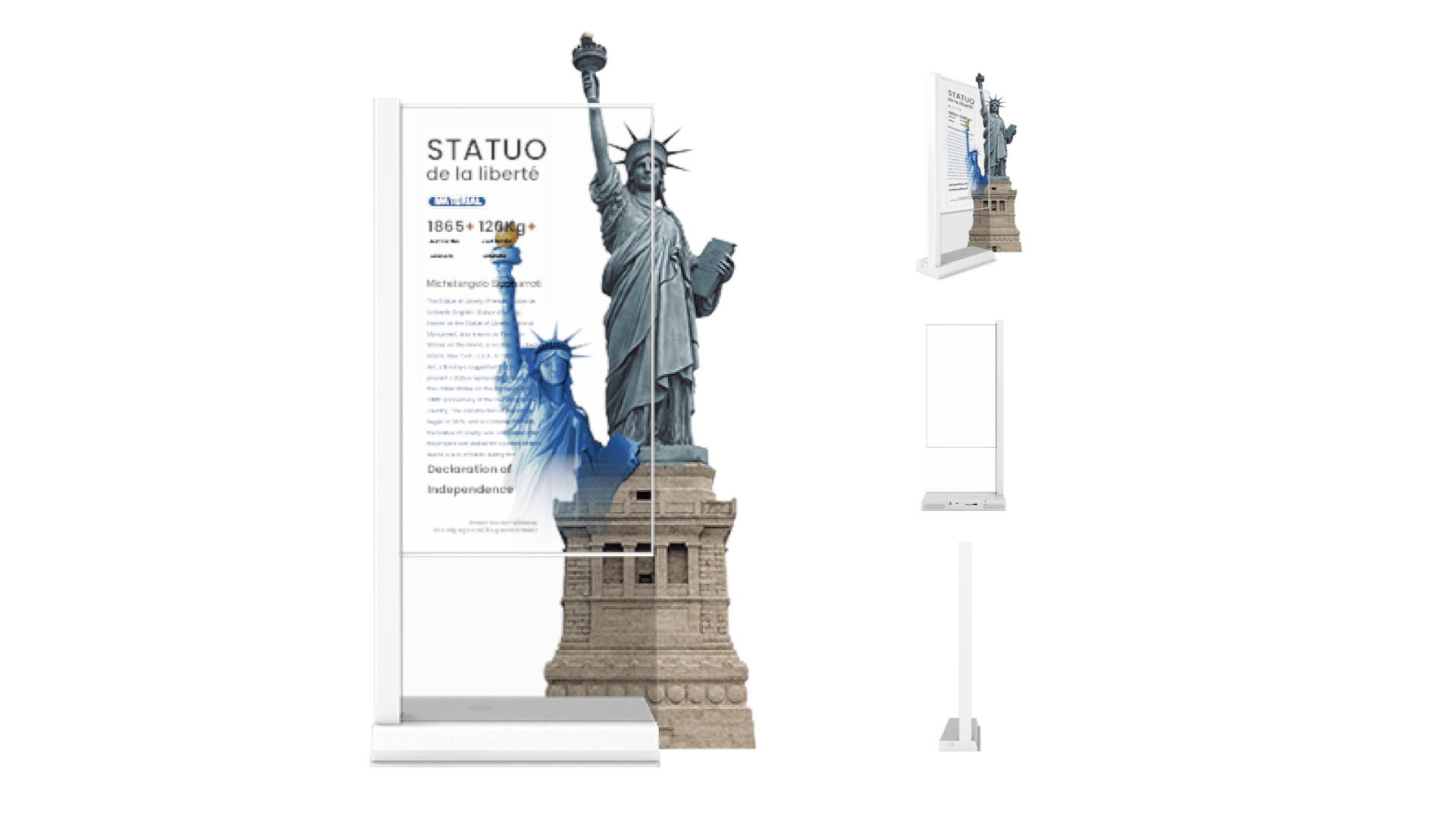
Bebright Global supplies and installs OLED display screens for premium commercial environments across the UAE, Saudi Arabia, and the wider GCC region. Our OLED series is specified for luxury retail showrooms, five-star hotel lobbies, corporate headquarters reception areas, broadcast studios, cultural institutions, and any environment where the visual quality of the display is itself a statement of brand standard.
Every OLED display project we deliver is managed end-to-end — from site assessment and integration planning through to installation, calibration, content management system configuration, and long-term after-sales support. We serve clients in Dubai, Abu Dhabi, Sharjah, Riyadh, Jeddah, Dammam, and across the GCC.
OLED stands for Organic Light-Emitting Diode. Unlike conventional LED-backlit display panels, an OLED screen has no backlight system at all. Each individual pixel in an OLED display generates its own light by passing an electric current through a layer of organic compounds. When a pixel needs to display black, it simply switches off completely - producing a true, absolute black that LED-backlit displays cannot replicate, because in LED panels the backlight continues to bleed through even when the screen is showing a dark image.
This fundamental difference in how light is produced gives OLED displays their defining technical advantages: infinite contrast ratio, true black levels, pixel-accurate colour control, ultra-slim physical depth, and silent fanless operation. These characteristics make OLED the premium display technology of choice for environments where visual refinement, aesthetic integration, and brand presentation quality are the primary requirements.
The following specification table covers the core technical parameters of commercial OLED display systems as supplied by Bebright Global for UAE and GCC commercial installations:
| Contrast Ratio | Infinite (true black) | Each pixel switches off for black - LED displays cannot achieve this |
| Brightness | 250 - 800 nits (typ.) | Calibrated for controlled indoor ambient conditions; not for direct sunlight |
| Colour Gamut | Full DCI-P3 coverage | Cinema-grade colour accuracy for brand-critical retail and luxury environments |
| Colour Depth | 10-bit panel; 1.07 billion colours | Superior colour gradation versus standard 8-bit LED displays |
| Viewing Angle | Up to 178° horizontal & vertical | No colour shift or brightness loss at extreme off-axis viewing angles |
| Display Depth | Down to 5mm | Ultra-slim profile; architectural integration with minimal wall protrusion |
| Panel Weight | Significantly lighter than LED | Reduces structural load for ceiling, wall, and hanging installations |
| Refresh Rate | 120 Hz and above | Smooth motion rendering for video and dynamic content |
| Response Time | 0.1ms (typical) | Eliminates motion blur on fast-moving content and video feeds |
| Operating Noise | Silent (no fan) | No cooling fan required - ideal for quiet corporate and museum environments |
| Lifespan | 30,000 – 50,000 hours | Lower than LED (50,000–100,000 hrs); factor into total cost of ownership |
| Operating Hours | Up to 16 hours/day continuous | Suitable for commercial operation; not recommended for 24/7 operation |
| Screen Size Range | 55" to 97" standard panels | Larger wall configurations via multi-panel tiling or custom integration |
| Power Consumption | Lower than equivalent LED backlit | Energy efficient due to pixel-level switching off for dark content |
The choice between OLED and LED display technology depends on your environment, viewing requirements, operational hours, and budget. The table below sets out the decisive differences to help buyers in the UAE and Saudi Arabia make the right specification decision:
| Light source | Self-emissive pixels - no backlight | LED backlight or direct LED chips behind/within panel |
| Black level | True black - pixel fully off | Near-black — backlight bleed is unavoidable |
| Contrast ratio | Infinite - industry highest | High but finite — typically 3,000:1 to 10,000:1 |
| Colour accuracy | Full DCI-P3; pixel-precise | High quality; sRGB to DCI-P3 depending on grade |
| Display depth / thickness | Down to 5mm - ultra-slim | Typically 60–120mm cabinet depth |
| Viewing angle | Up to 178° - no shift | Wide, but some brightness/colour shift at extreme angles |
| Maximum brightness | 250-800 nits | 800–2,000 nits (indoor LED); 5,000–10,000 nits (outdoor) |
| Operational noise | Silent - no fan required | Low fan noise on most commercial LED cabinets |
| Screen size scalability | Limited - standard panel sizes | Unlimited - modular panels tile to any size |
| Operational lifespan | 30,000–50,000 hours | 50,000–100,000 hours |
| Recommended daily hours | Up to 16 hours/day | 16-24 hours/day including 24/7 rated options |
| Best environments | Luxury retail, hotel lobbies, museums, HQ reception, broadcast studios | Retail, corporate, command centres, auditoriums, 24/7 control rooms |
| Relative cost | Premium investment | Standard to high commercial cost range |
OLED display screens are specified for commercial environments in the UAE and Saudi Arabia where three conditions exist together: controlled ambient lighting, viewing distances of under 5 metres, and premium brand or aesthetic requirements. The following environments are where OLED consistently delivers results that LED cannot match:
| Luxury retail showrooms | True black for jewellery, watch & fashion display; colour fidelity matches product photography | Dubai Mall flagships, luxury boutiques in Mall of Emirates, high-end brand activations |
| Five-star hotel lobbies | Ultra-slim wall integration; silent operation; premium visual statement | Palm Jumeirah, Downtown Dubai, and Riyadh luxury hotel reception and lounge areas |
| Corporate HQ reception | Brand-quality visuals; architectural flush-mount; no fan noise in quiet reception | DIFC towers, Riyadh's King Abdullah Financial District, Abu Dhabi corporate headquarters |
| Broadcast & media studios | Studio-grade colour accuracy; zero fan noise critical for audio recording | Dubai Media City, Abu Dhabi media production facilities, Riyadh broadcast environments |
| Museums & cultural venues | Silent operation for quiet gallery spaces; true-colour artwork reproduction | Cultural institution galleries, experience centres, heritage display environments in UAE and KSA |
| Executive boardrooms | Cinema-quality for close viewing; sleek profile; no backlight bleed in dark presentation mode | C-suite meeting rooms, private investor suites, government executive meeting environments |
| Premium experience centres | Immersive visuals with deep contrast for brand and product storytelling | Automotive showrooms, real estate developer experience suites, luxury hospitality lounges |
| High-end retail window displays | Vivid, accurate colour for window-facing product display in mall environments | Glass-fronted boutiques in Dubai Mall, Abu Dhabi Yas Mall, and Riyadh's flagship malls |
The UAE and Saudi Arabia operate some of the most competitive commercial environments in the world. Dubai Mall, Mall of the Emirates, Riyadh's Olaya commercial district, and the luxury hospitality belt along Palm Jumeirah all demand display technology that meets the visual expectations of an internationally sophisticated audience. In these environments, display quality is not a technical specification - it is a brand signal.
OLED displays meet four specific requirements that are especially relevant to premium commercial environments in the GCC:
Colour Accuracy for Luxury Brand Environments
Premium retail and hospitality brands in the UAE operate under strict brand guidelines that govern how colours are reproduced in physical environments. OLED's full DCI-P3 colour gamut and pixel-accurate colour reproduction ensure that product photography, brand films, and marketing content display with the same colour accuracy as the master files - something LED-backlit displays cannot consistently deliver due to backlight uniformity variations.
Architectural Integration in Interior Design-Led Projects
Interior designers and architects working on premium projects in Dubai and Riyadh consistently request display solutions that integrate flush with wall surfaces without the visible depth and thermal requirements of LED cabinet systems. OLED panels - at as little as 5mm display depth - can be mounted with a near-flush wall profile, treated as an architectural surface element rather than installed technology.
Silent Operation for Hospitality and Cultural Environments
OLED displays require no active cooling system - no fans, no vents, and no thermal exhaust. In hotel lobbies, museum galleries, private dining rooms, and executive suites, fan noise from display systems is a known source of client complaints. OLED eliminates this entirely, maintaining the acoustic standards required in premium hospitality and cultural venues across the UAE and Saudi Arabia.
Performance in Carefully Controlled Lighting Environments
Premium retail, luxury hospitality, and corporate environments in the GCC invest significantly in precision lighting design. In these controlled ambient conditions, OLED's true black levels and infinite contrast create a visual impact that LED-backlit displays cannot match dark content appears genuinely dark, and bright highlights appear luminous, creating the high-dynamic-range visual effect that luxury brands specifically request.
An OLED (Organic Light-Emitting Diode) display screen uses individual self-emissive pixels — each pixel generates its own light by passing electricity through a layer of organic material. This means no backlight is required. An LED display screen, by contrast, uses a separate light source — either an LED backlight behind the panel, or individual LED chips mounted in a cabinet — to illuminate the image. The fundamental difference produces OLED's defining advantages: when an OLED pixel displays black, it switches off completely, achieving absolute black. An LED display cannot do this — the backlight continues to emit light through dark regions, producing near-black rather than true black. OLED's result is an infinite contrast ratio, more accurate colours, a thinner physical profile, and silent operation. LED screens, however, offer higher maximum brightness, greater scalability to any screen size, longer operational lifespan, and lower cost.
OLED display screens perform best in controlled indoor environments where viewing distances are under 5 metres, ambient lighting is managed, and visual quality is a primary requirement. In the UAE and GCC, the ideal environments are luxury retail showrooms (particularly jewellery, watches, fashion, and automotive), five-star hotel lobbies and reception areas, corporate headquarters reception and boardrooms, broadcast and media studios, museum and cultural gallery spaces, and premium experience and brand centres. OLED is not the right choice for environments that require very high brightness (above 800 nits), 24/7 continuous operation, large-format screen configurations beyond 100 square metres, or outdoor or semi-outdoor deployment. For those requirements, SMD or COB LED screens are more appropriate.
Commercial OLED display screens are typically rated for 30,000 to 50,000 operating hours. At 12 hours of daily operation, 30,000 hours equates to approximately 6.8 years; at 50,000 hours it extends to approximately 11.4 years. The key lifespan factor specific to OLED technology is brightness degradation — organic pixels lose luminosity over time, and the rate of degradation accelerates at higher brightness settings. Running OLED screens at 50–70% brightness rather than maximum brightness significantly extends operational lifespan. OLED lifespan is shorter than commercial LED screens (50,000–100,000 hours), which should be factored into total cost of ownership analysis. Bebright Global provides maintenance contracts and calibration services to support OLED installations throughout their operational life across the UAE and Saudi Arabia.
Yes. Bebright Global operates a regional office in Riyadh at Showroom No. 02, Al-Mazaya Tower, Olaya Street, Riyadh, KSA (telephone: +966 54432 8456). We supply and install OLED display screens across Saudi Arabia for luxury retail, hospitality, corporate, and government projects in Riyadh, Jeddah, Dammam, Al Khobar, and other commercial cities across the Kingdom. Saudi Arabia projects are managed with on-site installation teams, local calibration support, and after-sales technical service. Government and semi-government OLED display projects comply with Saudi Building Code and relevant national regulatory standards.
OLED display screen pricing in the UAE is determined by screen size (typically 55 to 97 inches per panel), number of panels in the installation, mounting and integration complexity, content management system requirements, and structural work. OLED is a premium technology - expect to pay a significant premium over equivalent-size LED installations. As a general market guide, a single commercial OLED panel installation in a UAE environment typically starts from AED 25,000 for a standalone panel installation and increases with scale, configuration, and content system complexity. Multi-panel OLED wall configurations for hotel lobbies or flagship retail environments range from AED 150,000 to AED 800,000+ depending on scale. Contact Bebright Global for a project-specific commercial quotation following a free site assessment - +971 50 403 7863.
Yes, OLED panels can be tiled in multi-panel configurations to create larger display surfaces. The most famous example in the UAE region is the world's largest OLED video wall installed at Dubai Mall, which used 820 OLED panels to create a 50 × 14 metre display. However, multi-panel OLED walls have visible joins (bezels) between individual panels, unlike LED screen systems which are modular and truly seamless. For large-format seamless walls — where no visible joins are acceptable — fine-pitch LED video wall technology is typically specified instead. OLED multi-panel configurations are most appropriate for applications where the installed environment can accommodate the panel frame, or where the size does not exceed what a small number of panels can cover. Bebright Global advises on the right technology for your specific wall size, viewing conditions, and budget during the free site assessment.
OLED screens are designed for climate-controlled indoor environments, which is the standard condition in UAE commercial buildings. They do not perform well in high ambient temperatures or humidity without adequate air conditioning — however, all commercial spaces in the UAE where OLED would be specified (luxury retail, hotels, corporate offices) are fully climate controlled to standards that are well within OLED operating parameters (typically 0–40°C operating range, under 85% non-condensing humidity). The UAE's extremely high outdoor temperatures (up to 48–50°C in summer) are not a factor for indoor OLED installations in climate-controlled spaces. Bebright Global's site assessment evaluates the specific thermal environment of each installation location before specification.
The content management system (CMS) for an OLED display installation depends on the operational environment and use case. For single-screen or small multi-screen retail and hospitality environments, a cloud-based digital signage CMS allows remote scheduling and content updates without on-site access. For broadcast studios and high-precision brand environments, hardware-based media players with direct HDMI or DisplayPort feeds provide the most reliable and highest-quality signal delivery. For multi-location deployments across UAE and Saudi Arabia, a centralised enterprise CMS manages content across all sites from a single dashboard. Bebright Global specifies, supplies, configures, and trains operational staff on the most appropriate CMS for every OLED installation - CMS setup is included as part of every project delivery.
Commercial OLED display screens require less physical maintenance than LED cabinet systems, primarily because there are no fans, filters, or modular LED tiles to replace in normal operation. Key maintenance activities include: regular surface cleaning with appropriate anti-static cleaning materials; periodic brightness calibration as the display ages to maintain consistency with originally specified brightness levels; software and firmware updates for the media player and CMS; and pixel-level monitoring for any early signs of organic material degradation. Bebright Global offers annual maintenance contracts for OLED installations across the UAE and Saudi Arabia, covering calibration, diagnostic inspections, and technical support to protect the investment over the display's operational life.
For a luxury hotel lobby in Dubai, OLED is often the preferred specification when the display will be viewed at close range (under 3–4 metres), the interior design calls for a flush or architectural wall surface, and the screen will operate for 12–16 hours daily in a quiet environment. OLED's true black levels create dramatic visual contrast against luxury interior materials — marble, brushed metal, bespoke lighting — in a way that LED-backlit displays do not. However, if the lobby display needs to be very large (over 6 × 3 metres without visible joins), or if 24/7 continuous operation is required for information or wayfinding, an LED video wall installation would typically be specified instead. Bebright Global provides a free site assessment for hotel lobby display projects across Dubai, Abu Dhabi, and the wider UAE - our technical team will provide an objective recommendation based on your specific requirements, not a preference for any particular technology.
Get expert guidance on OLED screen selection, system integration, and planning.
Gubash Building Al Khabaisi, Al Ittihad Road | PO BOX 99357 | Dubai | UAE
+971504037863Showroom No 02 | Al-Mazaya Tower | Olaya Street | PO BOX 55599 | Riyadh | KSA
+966 54432 8456© 2026 Bebright Global | LED Screen and AV Solutions Company in UAE | Dubai | Abu Dhabi | Riyadh | All rights reserved. | Powered by Msquad